

Planning a family beach day in Miami? Before packing the towels and sunscreen, it’s important to understand that not all beaches offer the same swimming conditions. Knowing where to go—and what to watch for—can help keep your family safe while making the most of your vacation.
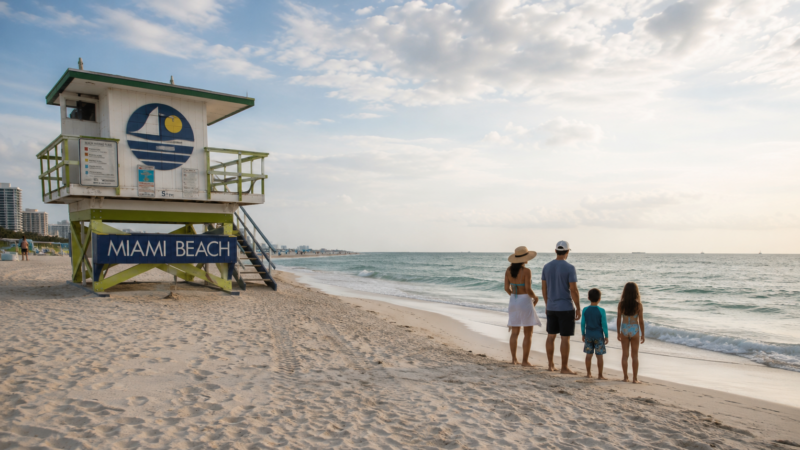
The Two Worlds of Miami Water: Biscayne Bay vs. the Atlantic
Miami is not one beach experience. It’s two.
Biscayne Bay is the “inside water.” Sheltered by barrier islands like Miami Beach and Key Biscayne, it tends to have smaller waves, calmer surface conditions, and shallow entry points where kids can wade longer before it gets deep. The bottom is often softer, sometimes grassy or muddy. The real hazards here are less about waves and more about boat traffic, channels, and sudden drop-offs where the bay deepens quickly.
The Atlantic Ocean is the “outside water”—what most people picture when they say “Miami Beach.” It comes with more powerful waves, even on calm-looking days, and sandbars and troughs that can shift, turning knee-deep water into chest-deep water in a single step for a smaller child. Rip currents are the most serious routine danger here, and depth changes and shore break can be much more dramatic, especially after windy days.
Calm Beaches for Young Children
For toddlers and brand-new swimmers, the goal is calm, shallow, and predictable water. Matheson Hammock Park’s lagoon is a man-made, protected swim area that often feels more like a bay-front wading pool than a full beach day—ideal for little ones who want water time without wave drama. Crandon Park on Key Biscayne is another family-friendly option, with a wide shoreline and typically gentler conditions than many open-ocean stretches, though it’s still real water that calls for close supervision.
Before heading to the bay, the youngest swimmers benefit most from one-on-one water safety training designed specifically for infants who aren’t yet water safe.
Beaches for Growing and Confident Swimmers
For kids who can swim but tire quickly, look for beaches with lifeguards, room to stand, and fewer surprises. The Surfside and North Beach areas often have a calmer vibe than the busiest tourist zones, with long stretches where you can set up near a lifeguard and keep a clear line of sight to the water. Bill Baggs Cape Florida on Key Biscayne is beautiful and has a classic Florida feel, but it should be treated as true ocean water—best saved for lower-hazard days, with younger swimmers kept in close range.
For confident swimmers and teens, guarded stretches of the Atlantic away from inlets can be a great experience, as long as families stay near lifeguards and steer clear of areas where currents tend to concentrate. Spots near inlets and jetty structures can look calm and still move like a conveyor belt underneath—these are not areas for casual, unsupervised swimming.
The parent rule that pays dividends: the best family beach is the one where you’re happy to stay planted near a lifeguard tower, not the one with the prettiest photo backdrop.
Water Competence Beats Pretty Strokes
Most vacation water incidents don’t happen because a child can’t swim freestyle. They happen because a child can’t handle a surprise—a gulp of water, a wave to the face, a sudden deep step, a moment of panic.
Before a Miami trip, the goal isn’t a perfect stroke—it’s water competence, the set of skills that buy time and calm when something unexpected happens. That means being able to float on the back independently, roll onto the back to breathe after a splash or a tumble, tread water for 30–60 seconds, and safely find footing to move back toward shore. Just as important is the habit of “stop, breathe, signal”—calling for help early instead of fighting silently.
If your child hasn’t practiced these skills recently, put it on the pre-trip checklist right alongside sunscreen and chargers. A few focused lessons can change the tone of the entire vacation. Parents often look for structured water safety training that prioritizes floating, breathing control, and confidence over looking polished for a video—and that’s exactly what programs like SwimRight Academy deliver.
And here’s the uncomfortable truth worth stating plainly: inflatable toys are not swim skills. In the ocean, they can turn into sails.
Your On-the-Sand Safety Action Plan
Miami’s beaches are managed with safety systems, but parents have to use them. This is the checklist worth following—because once the towels are down, distraction becomes the default.
Read the Flags Like a Weather Report
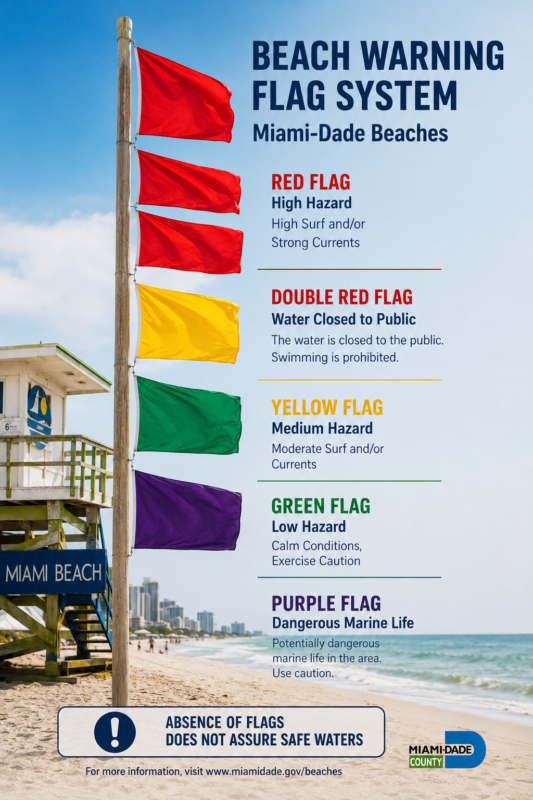
Miami-Dade beaches commonly use a color-coded warning flag system posted near lifeguard stands:
Purple: Marine life present (often jellyfish or other stinging organisms)
Green: Lower hazard (still supervise—green doesn’t mean “risk-free”)
Yellow: Moderate hazard (use extra caution, especially with kids)
Red: High hazard (stronger surf and currents; not a kid-friendly swim day)
Double red: Water closed to the public (non-negotiable)
Also watch for the red-and-yellow boundary flags marking the designated guarded swim area. The best parenting decision on a Miami beach is boring and effective: set up near a lifeguard and swim where they want you to swim.
Rip Currents: The #1 Ocean Danger
Rip currents don’t look like a monster—they look like a shortcut. Watch for a darker, calmer-looking channel between breaking waves, foamy water or debris moving steadily away from shore, or a break in the wave pattern, as if someone paused it in one spot.
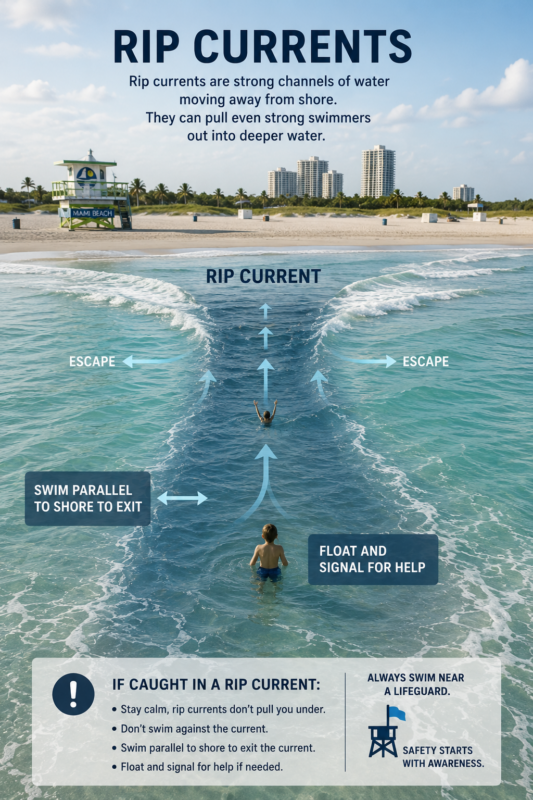
If you think your child is being pulled out, stay calm and get help immediately by waving, shouting, or signaling the lifeguard.
Do not chase straight out into the current. Practice this phrase with your child beforehand: “Float, face up, and move sideways.” Strong swimmers should swim parallel to shore to exit the current, then angle back in; kids should focus on floating and signaling, conserving energy until help arrives. On a red flag day, treat the ocean like a scenery feature, not an activity.
Jellyfish and Stingrays: Simple Protocols
If a jellyfish sting happens, get the child out of the water, avoid rubbing the area (which can drive stingers in deeper), and rinse with seawater rather than fresh water. Have a lifeguard assess the sting, and stay alert for allergic reactions, trouble breathing, or widespread hives, which need urgent attention.
Stingrays often rest under sand in shallow water, so teach kids the “stingray shuffle”—sliding feet along the bottom instead of stepping straight down. It’s simple and surprisingly effective. If a sting does happen, alert lifeguards right away; pain control often involves hot (not scalding) water and medical evaluation.
Hazards That Aren’t “Water”
Miami’s sun and heat can cause just as much trouble as the water itself. UV exposure is intense, so plan for shade, reapply sunscreen, and schedule a midday break. Hot sand can burn fast—water shoes are a small investment with a big payoff. Rising tides change the slope and depth of the shoreline, so a safe wading zone at 10 a.m. can feel different by noon. And if you hear thunder, you’re already late to head in.
Start Planning a Safer Beach Day
A memorable beach vacation begins long before you arrive at the shore. Preparing children with basic water safety skills, choosing beaches that match their swimming ability, and staying aware of changing ocean conditions can make all the difference. With a little planning, Miami’s beaches can become one of your family’s favorite vacation memories.
Learn more at SwimRight Academy
 English
 Spanish