

June is National Safety Month, which is an excellent opportunity for families, schools, and communities to focus on preventing injuries and creating safer environments for children.
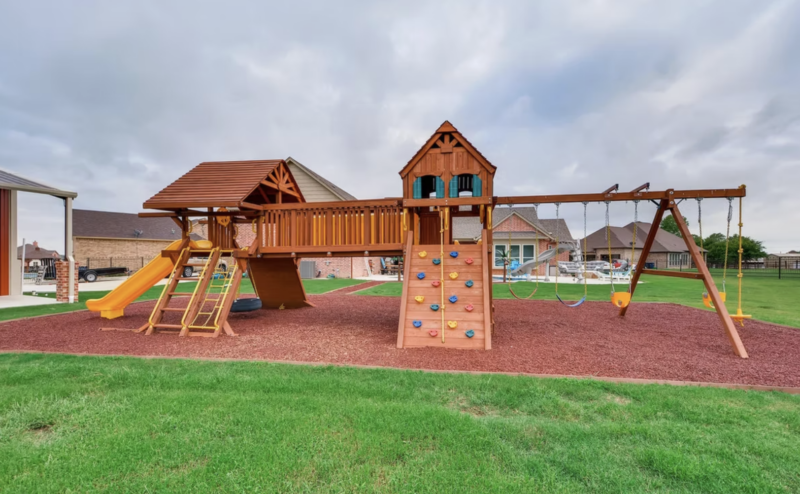
While parents often think about bike helmets, car seats, and sunscreen, one of the most overlooked safety factors is right beneath their feet: playground surfacing. Whether it’s at a school, local park, daycare, or in their own backyard, the surface beneath playground equipment plays a major role in how serious a fall-related injury can be.
As the Chief Technology Officer at Rubberecycle Corporation (which offers top quality rubber surfacing products for playgrounds), I have seen firsthand that, unfortunately, many parents and property owners still assume that grass or packed dirt provide adequate protection. In reality, these surfaces offer very little impact absorption and can increase the risk of serious injuries (especially head injuries). As awareness of concussion prevention and child safety grows, playground surfacing should become a bigger part of the national conversation.
Falls Are the Leading Cause of Playground Injuries. Falls remain one of the most common reasons children visit emergency rooms each year. According to the National Center for Biotechnology Information, falls account for nearly 30% of pediatric trauma cases. Playground accidents are a major contributor, particularly among younger children whose balance, coordination, and judgment are still developing.
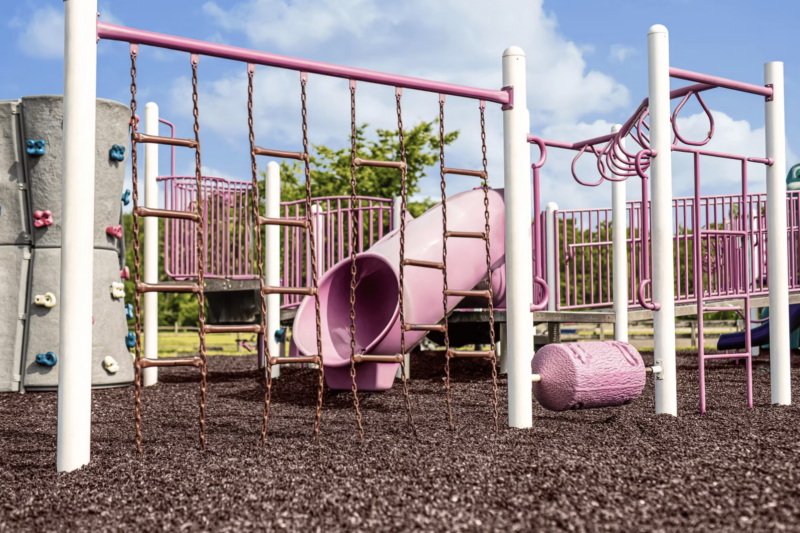
While many playground injuries involve broken bones or sprains, head injuries are among the most serious concerns. Even seemingly minor falls can result in concussions or traumatic brain injuries when children land on hard, unforgiving surfaces.
Parents are generally careful about making sure children wear helmets while riding bikes or scooters because they understand how important it is to protect a child’s head during impact. However, playground falls often happen unexpectedly and at a young age, long before children are consistently using protective equipment. In these situations, the playground surface itself becomes the first line of defense.
Why Grass and Dirt Are Not Safe Playground Surfaces. One of the biggest misconceptions about playground safety is the belief that grass, soil, or packed dirt are “soft enough” to cushion a fall. While these surfaces may appear safe, they do very little to absorb impact energy. Grass quickly wears thin in high-traffic areas beneath swings, slides, and climbing structures. Dirt also becomes compacted over time, creating a hard surface that offers minimal protection during falls. And while it’s commonly used for playground surfacing, traditional wood mulch can compact, scatter, and freeze in colder climates. This reduces its ability to meet safety performance standards over time.
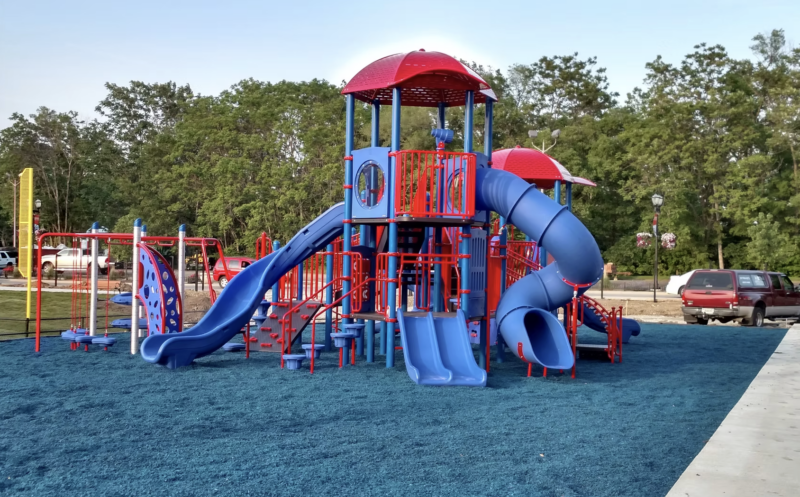
This is especially important on public playgrounds, where equipment is often much taller than residential backyard playsets. The higher the fall height, the greater the potential for serious injury if the surface below cannot adequately absorb impact. Simply meeting minimum safety requirements is not always enough. There is a substantial difference between a surface that barely passes impact standards and one that significantly outperforms them.
Understanding HIC Scores and Playground Safety. One of the most important measurements in playground safety is the Head Injury Criterion, commonly referred to as HIC. HIC scores are used to evaluate how effectively a playground surface reduces the force of impact during a fall and the likelihood of a serious head injury. In simple terms, lower HIC scores indicate better protection.
This distinction matters because many playground surfaces can technically meet ASTM fall safety standards while still providing far less impact protection than higher-performing alternatives. Materials like engineered wood fiber may pass testing initially, but their safety performance can diminish as they compact, shift, or freeze.
Impact-absorbing rubber surfaces, by comparison, consistently achieve significantly lower HIC scores, as it offers greater protection against severe head injuries. For parents and communities, this is an important shift in perspective. Playground surfacing should not simply be viewed as a box to check for compliance purposes. It should be viewed as critical protective equipment; every bit as important as helmets, seatbelts, and other child safety measures.
Why Rubber Playground Surfacing Outperforms Traditional Materials. Rubber playground surfacing is specifically engineered to absorb impact and cushion falls. Whether using rubber mulch or poured-in-place rubber systems, these surfaces are designed to reduce the force transferred to a child’s body and head during an accident. Unlike grass or dirt, rubber surfaces maintain a flexible, shock-absorbing structure that helps soften landings. High-quality rubber mulch products can far exceed ASTM standards for impact attenuation. It provides a much higher level of protection than traditional loose-fill materials.
Rubber mulch also offers practical long-term advantages over wood mulch and other alternatives. It is less likely to compact, decompose, or scatter outside play zones. It also maintains more consistent depth coverage, which is essential for preserving fall protection over time. In colder regions, rubber remains more resilient and does not freeze into a hard surface the way wood-based materials often can.
There are also persistent misconceptions surrounding rubber playground surfacing and health concerns. However, modern playground rubber products have been extensively studied and continue to demonstrate strong safety performance. Current evidence shows that quality rubber playground surfaces present no legitimate health risk concerns while dramatically outperforming many alternative materials in fall protection.
Proper Installation and Maintenance Still Matter. Even the safest playground surface requires proper installation and maintenance to remain effective. For loose-fill rubber mulch systems, experts generally recommend maintaining a depth of at least three to four inches, depending on equipment height and manufacturer specifications. Over time, playground materials naturally shift through use and weather exposure, making regular inspections important.
Schools, parks, daycare centers, and homeowners should routinely:
- Rake displaced material back into high-traffic areas
- Check for thinning beneath swings and slide exits
- Replenish material as needed
- Inspect for proper coverage around all equipment
Consistent maintenance will help ensure the surface continues to provide the intended level of impact protection year after year.
June National Safety Month Is a Reminder to Rethink Playground Protection. As communities place greater emphasis on concussion awareness and child injury prevention, playground surfacing deserves more attention. Parents already understand the importance of helmets for biking and sports, and playground surfaces should be viewed the same way. This is especially paramount because many playground injuries involve very young children. So during June National Safety Month, the focus should go beyond meeting minimum standards and toward choosing safer, impact-absorbing options like rubber surfacing that provide better protection when accidents happen.
Sheryl Berkley is the Chief Technology Officer at Rubberecycle Corporation, a leader in top quality rubber surfacing products for playgrounds and commercial establishments since 1996. The company specializes in impact-absorbing playground mulch, tiles, and poured-in-place surfacing.. A playground safety expert, Sheryl educates the public on best practices for safe play environments, the benefits of sustainable surfacing materials, and strategies for preventing common injuries.
Find more information here.
 English
 Spanish